
The scandal shaking Turkey: What we know so far
Turkey's $6.5 Billion Stock Market Scandal: How 455,000 Investors Were Caught in the BIST 100 Collapse.
Nearly half a million investors have been harmed, dozens of people have been arrested, and a senior politician in Erdogan's ruling party has resigned. Here's what we know so far about the scandal shaking Turkey.
Anyone putting money away in Turkey wants the same basic thing: for it to hold its value. That's easier said than done with inflation running at 30%. So many people, already battling the fallout of an economic crisis, have turned to gold, foreign currency, stocks, and increasingly, exchange-traded funds promising high returns.
But the stock market turned into a trap for many Turks. In mid-September, the BIST 100 index fell 6% in a single day and shed 12% over just a few sessions. The trigger wasn't market nerves, it was a full-blown manipulation scandal. Around 455,000 investors were affected, more than 45 people were arrested, and a senior figure in the ruling Justice and Development Party (AKP) resigned. Here are the five key questions at the heart of it.
What exactly happened?
It started when certain investment funds began struggling to pay investors back on time. Among those hit were funds run by Pusula Portföy and Tera, the latter alone managed roughly €6.5 billion.
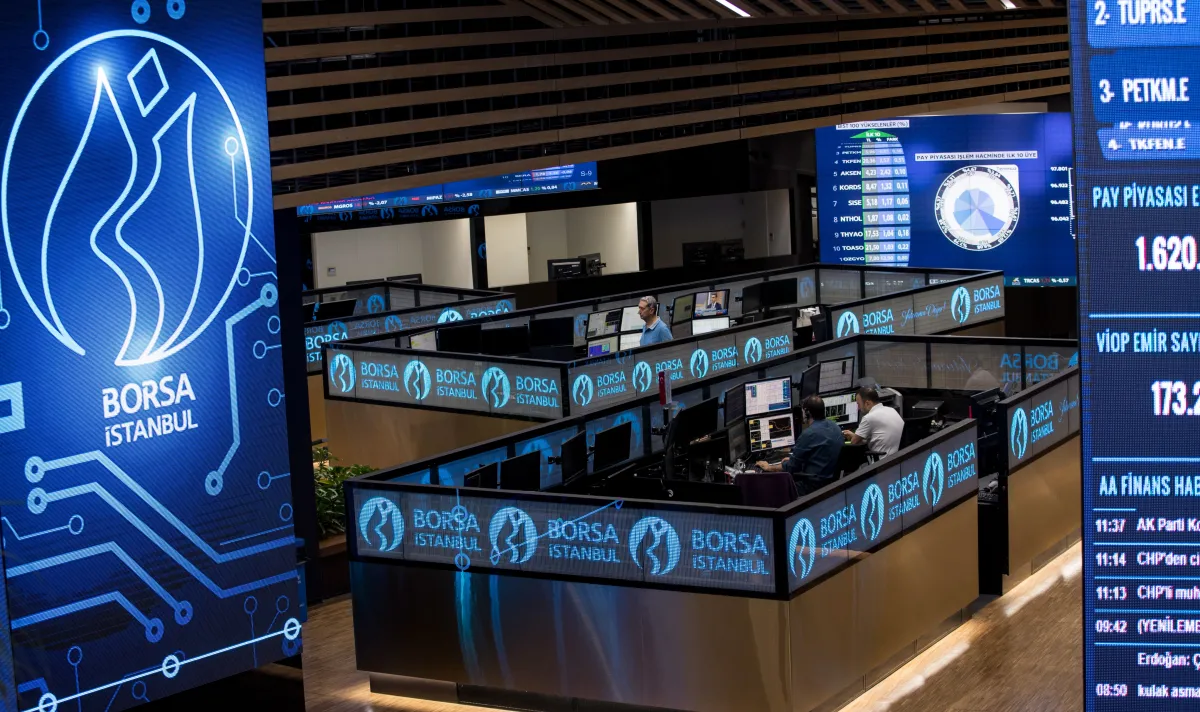
Photograph: BGNES/ EPA
Turkey's Capital Markets Board (SPK) stepped in and shut down seven funds, including Tera, Pusula, and Atlas. According to the state-run Anadolu Agency, 131 funds are slated for liquidation. Istanbul prosecutors have opened an investigation into fraud, capital markets law violations, and forming a criminal organization, said Justice Minister Akın Gürlek. The core suspicion: asset managers artificially inflated the funds' value, which in reality contained uncovered, effectively worthless shares.
More than 45 people have been arrested so far, including executives of the investment firms. The assets of 42 individuals and 46 legal entities have been frozen. The stock exchange felt the shock immediately: 27 stocks dropped out of the flagship BIST 100 index.
Will investors get their money back?
The funds will be liquidated, their assets sold off, with the proceeds distributed among investors according to how many units each holds. The deadline has been extended from three months to six, which financial consultant Aysel Gündoğdu told DW should ease the selling pressure and prevent shares being dumped at rock-bottom prices. Not every fund will need the full six months; some could wind down sooner depending on market conditions.
But there's no guarantee. An investment fund is not a savings account, and investors aren't insured against losses. Gündoğdu expects money-market funds to be largely repaid, but for hedge funds and funds stuffed with practically unsellable, worthless shares, it will be much harder. On top of that come market losses and any damage caused by the alleged wrongdoing.
Economist Güldem Atabay stresses a key distinction: exchange losses and manipulation are not the same thing. Investors accept market risk but they are not obliged to accept false information, artificially inflated valuations, or missing controls.
Are the companies and managers on the hook for the damage?
When a fund is closed, its shares and securities can be sold. The question is what they're worth and how easily they can be sold. Gündoğdu doubts the funds' available assets will cover investors' claims. There were structural failures too: "The crisis is much bigger than a simple liquidity crisis. There are errors in management and supervision." For that reason, she doesn't rule out going after the personal assets of the funds' founders and managers to make up the shortfall.
Atabay goes further: the guilty must be named, and the damage repaired at their expense. Once the liquidation is done, responsibility for any violations must be established. "Liquidation does not replace the need for liability," she told DW.
What is the political cost?
The crisis has already claimed a political scalp. Fatma Betül Sayan Kaya, AKP deputy chairwoman and former Family Minister, asked President Erdogan to relieve her of all her positions, effectively resigning.
The reason: accusations of share dealings by her husband, İlyas Kaya, in connection with the stock crisis. In a social media post, Kaya wrote that political responsibility goes beyond legal responsibility, and that her position should not stand in the way of the investigation.
The opposition, for its part, plans to launch a parliamentary inquiry to establish whether politicians were involved in the manipulation scandal.