
China tests Starlink competitor, connecting the Arctic and Antarctica
China tested Starlink’s competitor: satellites connected the Arctic and Antarctica
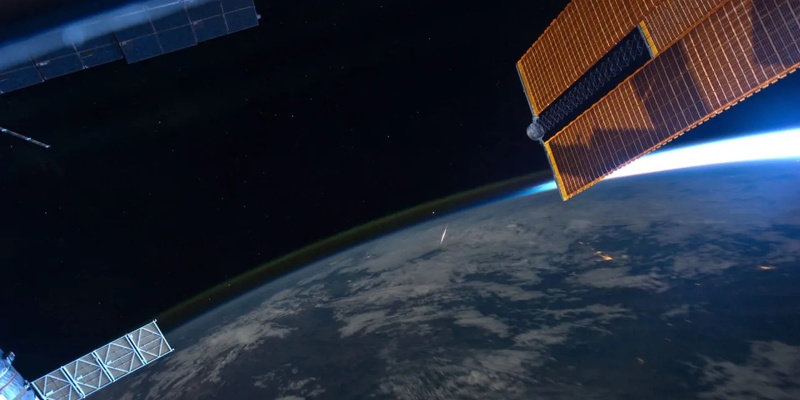
China has tested the satellite network Guowang, which in the future should compete with Starlink company SpaceX. According to China Aerospace Science and Technology Corporation (CASC), researchers in the Arctic conducted a video call with employees of the Chinese station Qinlin in Antarctica.
Three Chinese polar expedition ships participated in the test. In addition to video link, experts checked the transfer of files and shipbuilders to the National Service of Maritime Data and Information of China. Such communication allows you to exchange work information in remote areas where there is no conventional telecommunications infrastructure.
China is building up satellite constellation
The Guowang network is operated by the state-owned China Satellite Network Group. The launch of its satellites began in December 2024. By the end of September, a little more than 180 vehicles were in orbit. In the long term, China expects to deploy a constellation of 12,992 satellites by 2035.
The nearest goals are more modest. By the end of 2027, Beijing plans to increase the number of vehicles to 400 to provide communication in the country. By the end of 2029, the constellation should have about 1300 satellites.
So far, Guowang is inferior to Starlink both in the number of devices and data transfer capabilities. However, the test in the polar regions showed that the network can already support video calls and forward practical information. For polar expeditions, this is important, since it allows you to coordinate the work of ships and research stations without contacting foreign telecom operators.
The development of its own infrastructure also meets China’s information security interests. Beijing seeks to control the transmission of sensitive data and less depend on foreign satellite systems.
Starlink is still far away
During the test, Guowang provided a peak data rate of about 30 Mbit / s both when downloading and when sending information. This is enough for video calls and many everyday tasks, but the real speed depends on the operating conditions of the network.
For comparison, Starlink usually provides a loading speed of 25 to 220 Mbit/s. It is estimated that the SpaceX satellite constellation has about 11 thousand devices. A large number of satellites help to keep in touch as they move over the Earth and expand the network’s capabilities, although the result also depends on the ground infrastructure and data transmission.
Chinese military analysts admit that a connection at a speed of 30 Mbit / s can be used for tactical communication and control of unmanned systems in real time. However, one bandwidth is not enough to judge the suitability of the network for such tasks. Resistance to radio-electronic interference, the reliability of the connection and availability of coverage are also important.
The importance of such systems became especially noticeable after Starlink provided communication in Ukraine during a full-scale conflict with Russia. Satellite networks in low-Earth orbit can support communications where land-based systems are inaccessible or damaged.
China has a second project
Guowang is not the only Chinese satellite network program. Shanghai Spacesail Technologies is developing the Qianfan group. Its long-term goal is to put 15 thousand satellites into orbit. By the end of September, according to published data, the group had 256 units, and by the end of 2026 their number is planned to increase to 324. Both projects should enhance China’s capabilities in the field of satellite communications.