
Nigeria Demands Two Permanent UN Seats, Veto Powers for Africa
Nigeria has demanded at least two permanent seats for Africa on the UN Security Council, along with veto powers for as long as the privilege remains in effect.
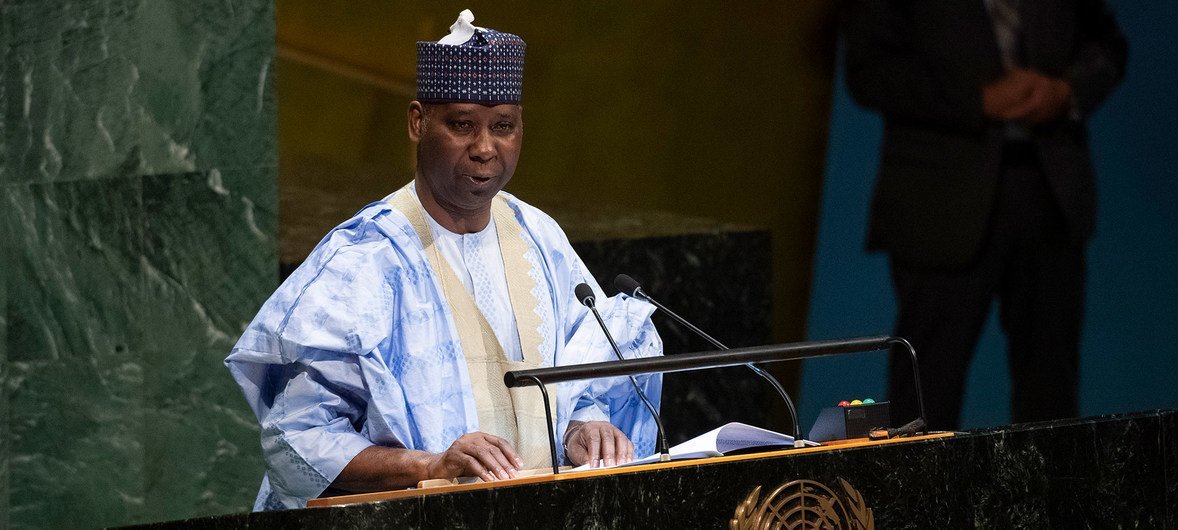
Vice‑President Kashim Shettima made the demand while delivering President Bola Tinubu’s national statement at the 81st UN General Assembly in New York. He also called for five non‑permanent seats for Africa, in line with the continent’s longstanding common position on reforming the Security Council.
Shettima argued that the Council’s current configuration no longer reflects contemporary geopolitical realities and undermines the legitimacy of global decision‑making. “The world of 2026 cannot remain captive to the distribution of power in 1945,” he said.
He emphasized that Africa could no longer be excluded from permanent membership while issues concerning the continent continue to dominate the Council’s agenda. According to him, Nigeria’s stance aligns with the Ezulwini Consensus and the Sirte Declaration, which together form the Common African Position. Under this framework, Africa seeks at least two permanent seats with all existing privileges, as well as five non‑permanent seats on the Council.
The African Union reaffirmed the demand in May, stating that Africa’s exclusion from permanent representation constitutes a historical imbalance in need of correction.
Shettima contended that institutions claiming authority to act on behalf of humanity must genuinely reflect the populations whose interests they are meant to serve. He linked Security Council reform to broader efforts to restore confidence in multilateralism amid growing geopolitical divisions.
The Vice‑President also reaffirmed Nigeria’s commitment to the UN Charter and international cooperation. He underscored Nigeria’s support for an international system in which diplomacy takes precedence over coercion and international law guides relations among states.
Shettima highlighted Nigeria’s contributions to international and regional peace operations in Liberia, Sierra Leone, Darfur, Mali, and The Gambia. He noted that Nigeria continues to engage through ECOWAS, the African Union, and Gulf of Guinea mechanisms, with efforts spanning mediation, counter‑terrorism, democratic governance, and maritime security.
He stressed that persistent conflicts across various regions underscore the urgent need to return to dialogue, collective responsibility, and the peaceful settlement of disputes. Specifically, he identified the conflict in Sudan and other crisis zones as requiring immediate diplomatic attention due to their far‑reaching humanitarian, economic, and geopolitical consequences.
The Vice‑President also warned against a global environment in which propaganda blurs the distinctions between victims and aggressors, thereby complicating accountability. He maintained that an inclusive and effective UN remains indispensable to global peace and sustainable development.
Nigeria’s demand comes amid renewed calls by African leaders for reforms to an institution whose permanent membership has remained unchanged since its founding. The Security Council currently has five permanent members—China, France, Russia, the UK, and the US—each holding veto power. Africa remains the only inhabited continent without permanent representation on the Council.
The African Union’s preferred reform model calls for at least two permanent African seats, including veto privileges for as long as they exist for current permanent members, as well as five non‑permanent seats for Africa.
Shettima reiterated Nigeria’s dedication to a multilateral order capable of addressing the challenges of the 21st century with greater credibility. He added that differences among nations should not obscure their shared humanity or their collective responsibility to preserve peace for future generations. (NAN)