
There Will Be No Safe Infrastructure': Iran Warns US.
'If Our Security Is Not Guaranteed, There Will Be No Safe Infrastructure': Iran Warns US as Indirect Talks Continues."
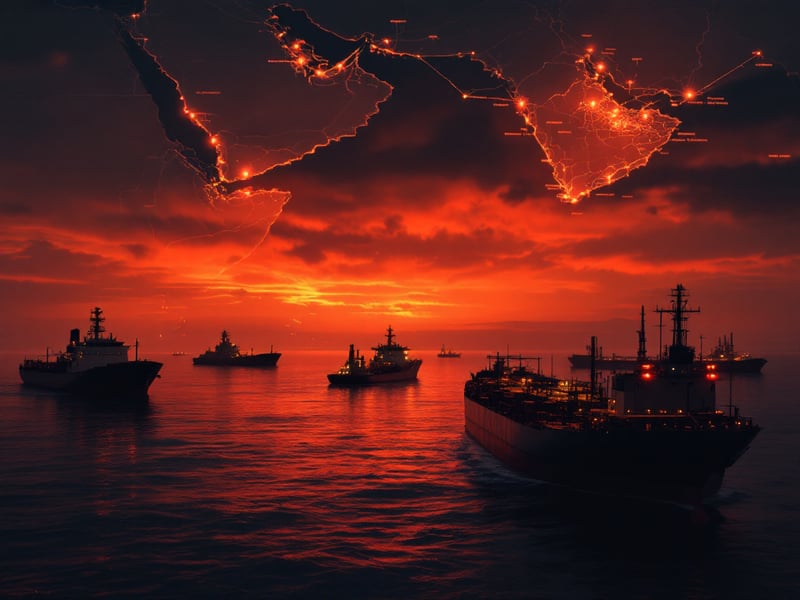
Iranian Parliament Speaker Mohammad Bagher Ghalibaf issued a blunt warning to the United States and other countries on Tuesday, declaring that if Iran's security is not guaranteed, "no infrastructure will remain safe" in the region, a threat aimed squarely at the oil infrastructure of the Persian Gulf, delivered as Washington and Tehran continue indirect negotiations over the Strait of Hormuz and Iran's nuclear program.
The Warning
Speaking during a public video conference released by Iranian state television, Ghalibaf addressed the message to "the delusional U.S. president," reacting to President Donald Trump's recent statements about the Strait of Hormuz and the movement of ships through it. The remarks were, he said, a repetition of previous claims "whose nature is known to everyone."
"In a region where we cannot sell oil, no one else will sell oil either," Ghalibaf said. "And if our security is not guaranteed, no infrastructure will remain safe."
He stressed that Iran would not be intimidated by threats, diplomatic pressure, or blockade, and warned that any aggression or "adventurism" against the country would draw a response he described as "hard, painful, precise and swift."
The statement is consistent with Iran's posture throughout the conflict that began with U.S. and Israeli strikes on February 28, and with its long-standing declared doctrine that Gulf energy infrastructure would be a target in any wider war. It also comes as a 45-day ultimatum issued by Iran's Supreme National Security Council on August 16, demanding an end to the naval blockade — is set to expire on Wednesday, September 30.
The Diplomatic Track
Ghalibaf's warning landed on a diplomatic landscape that is, by most accounts, still active.
Iranian Foreign Minister Abbas Araghchi, departing New York after the UN General Assembly, said Tehran had held further indirect talks with Washington through Qatari mediators and that he expected a formal U.S. response to Iran's proposal to reopen the Strait of Hormuz.
Iran proposed a seven-day plan for a ceasefire and phased reopening of the strait last week, contingent on the U.S. meeting conditions laid out in the memorandum of understanding the two countries signed in mid-June before it collapsed.
Trump said Sunday he expects new talks with Iran this week, but he described the latest Iranian proposal as unacceptable. "They want to make a deal, but it is not the deal that I want to make," he told Axios.
On the American side, the talks are being run by special envoy Steve Witkoff, Jared Kushner, Vice President J.D. Vance, and Secretary of State Marco Rubio, according to a U.S. official cited in multiple reports. The official said Trump is prepared to discuss sanctions relief and the release of frozen Iranian funds as part of a possible agreement, on the condition that Iran makes concrete progress on the nuclear issue. Iran has shown readiness for some flexibility on nuclear matters, the official said, but a gap remains between the two sides on deadlines for implementing any commitments.
Two Tracks, One Week
The juxtaposition is the story: on a single day, Iran's parliament speaker threatened regional infrastructure while Iran's foreign minister awaited a formal American answer to a ceasefire proposal, and a U.S. president who rejected that proposal said he expects to talk this week.
Whether the week ends in negotiation or escalation may hinge on the calendar. Iran's August ultimatum expires Wednesday. What happens to oil, shipping, and the blockade on that date and whether Washington's expected response to Tehran's proposal arrives before it, will go a long way toward determining which track prevails.