
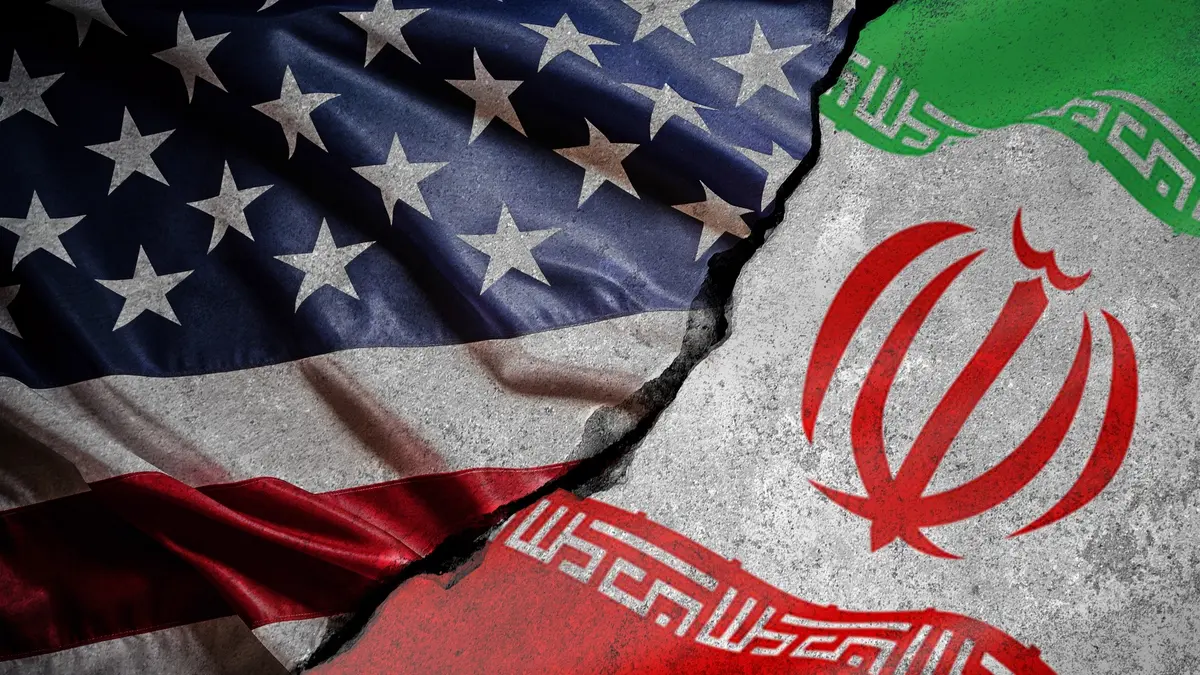
Trump, Iran and the Gulf: Deal Before Midterms, or War After Midterms?
They did not start the war ,but they would feel the next one first. That is the predicament confronting the Gulf monarchies as Iran renews its warnings that America's Arab partners could become targets if Washington resumes its bombing campaign, and as President Donald Trump frames his choice in the starkest possible terms: a deal with Tehran, or what he describes as its annihilation.
The warning was watched around the world, which propelled the question whether the United States and Iran can reach an agreement before the standoff tips back into open war and whether, with Houthi strikes hitting Saudi Arabia again, Washington's own posture has raised the security risks facing its allies.
Tehran's message to its neighbors
Iran has signaled to Gulf capitals before that proximity to American power carries a price. In 2022, Tehran warned the UAE and Kuwait that their territory could be at risk if it was used for operations against Iran. And the precedent has not stayed theoretical: when U.S. B-2 bombers struck Fordow, Natanz and Isfahan in June 2025, Iran answered within a day by firing missiles at Al Udeid Air Base in Qatar, a heavily telegraphed salvo, with no casualties, but aimed squarely at the largest American installation in the region.
Now, according to the diplomatic channels, Tehran has issued a fresh warning to Washington's Gulf partners: if the bombing campaign resumes, so could their exposure. For capitals that spent the last decade building economic hubs on the assumption of quiet, Dubai, Doha, Riyadh, Jeddah, the message lands with force.
Trump's fork in the road — and the clock beside it
Trump's own language has done little to soothe. The president, as noted, says he faces a choice between reaching a deal with Iran or "annihilating" it, rhetoric consistent with the maximalist posture he has held since American bombs joined Israel's campaign against Iranian facilities, first in June 2025 and again in the war that began on Feb. 28.
The central question is a matter of political arithmetic: that Trump may prefer to keep the powder dry until after the November midterms, and could restart the war once the votes are counted. The logic is not exotic. Escalation before an election means oil-price shocks at the pump, footage of missile defenses over American bases on every news network, and a reminder to tbase that elected him, in part, on promises of ending "forever wars."
After the midterms, a president in his term's second half loses that restraint and gains it back as leverage. Aides past and present have described the same rhythm in Trump's first term: strike hard, then seek the stage on which to announce the biggest deal of all.
The calendar gives the thesis a certain texture. Between now and December, Trump's schedule includes hosting the G20 summit in Miami on Dec. 14–15, a setting in which an unpredictable Iranian file is an inconvenience at best. Whether that argues for a deal or a quick, decisive reset is precisely the gamble.
The Houthi front reopens
What sharpens the dilemma is the second front. Houthi attacks on Saudi Arabia, dormant on that front since the UN-brokered truce of 2022, have resumed, according to the program, alongside the wider escalation. The Houthis spent years proving they can reach deep into the kingdom with drones and ballistic missiles, striking airports, pipelines and military sites between 2015 and 2022. They then spent two years attacking Red Sea shipping and Israel in the name of Gaza, drawing American and British strikes, until a U.S.–Houthi ceasefire brokered through Oman in May 2025 quieted their campaign against American targets.
If Ansar Allah is firing at the kingdom again, two carefully constructed arrangements are under strain at once: the Saudi–Houthi ceasefire which the Saudis broke by firing at Sanaa Airport in July, and the Saudi–Iranian rapprochement brokered by Beijing in March 2023, the cornerstone of Riyadh's whole de-escalation strategy. Each Houthi launch complicates Crown Prince Mohammed bin Salman's balancing act between a security relationship with Washington and an economic future that requires a quiet border with Tehran.
The Gulf's impossible position
The structural problem is geography. Gulf states host the densest concentration of American military power outside the United States, the Fifth Fleet in Bahrain, air wings in Qatar and the UAE, and growing footprints in Saudi Arabia itself. That presence is their insurance policy and their targeting liability at the same time.
They cannot ask Washington to leave and cannot ask Tehran to trust them while it stays. Between those poles, they have settled on a consistent ask: no surprises, no escalation on or over their soil, and a diplomatic off-ramp before the next round begins.
The costs of the current limbo are not abstract. Roughly a fifth of the world's oil and LNG transits the Strait of Hormuz; every uptick in tension ripples through shipping insurance, flight routes and investment. Even in ceasefire periods, the Gulf pays, in air-defense contracts, in rerouted airlines, in the quiet discount that risk attaches to everything the region is trying to build.
What a deal would actually require
The obstacles to the agreement Trump says he wants are concrete, not rhetorical. Iran insists on its right to enrich; Washington's stated demand is zero enrichment. The fate of Iran's stockpile of uranium enriched to 60%, weapons-grade adjacent, has been opaque since the strikes degraded IAEA visibility, and cooperation with inspectors has been suspended by law in Tehran.
The European powers triggered the UN snapback mechanism in September 2025, restoring international sanctions and pushing Iran further from the table. Any bargain would need sequencing Iran can sell domestically and verification Israel will accept, a gap the region's mediators, chiefly Oman and Qatar, have spent two years trying to bridge.
That is the wager, in the end. Trump says he wants the deal; Tehran says Trump must comply with the previous deal signed by him and it will not negotiate with a gun to its head; the Gulf states, who started neither the war nor the standoff, are asking only to be spared the worst of both outcomes. The midterms are on Nov. 3. The question, deal, or war? Now has a deadline attached to it.
Either way, our analysts believe a devastating war will break out after the midterm elections. Several signs point to an imminent conflict with Iran, regardless of whether a deal is reached before the midterms: the movement of military assets in and out of Germany; the sale of large quantities of bombs to Israel, which lacks the military aircraft to carry them; and the presence of numerous U.S. heavy-lift aircraft in the region. We also expect another pause and potential round of negotiations to occur between late November and early December.