
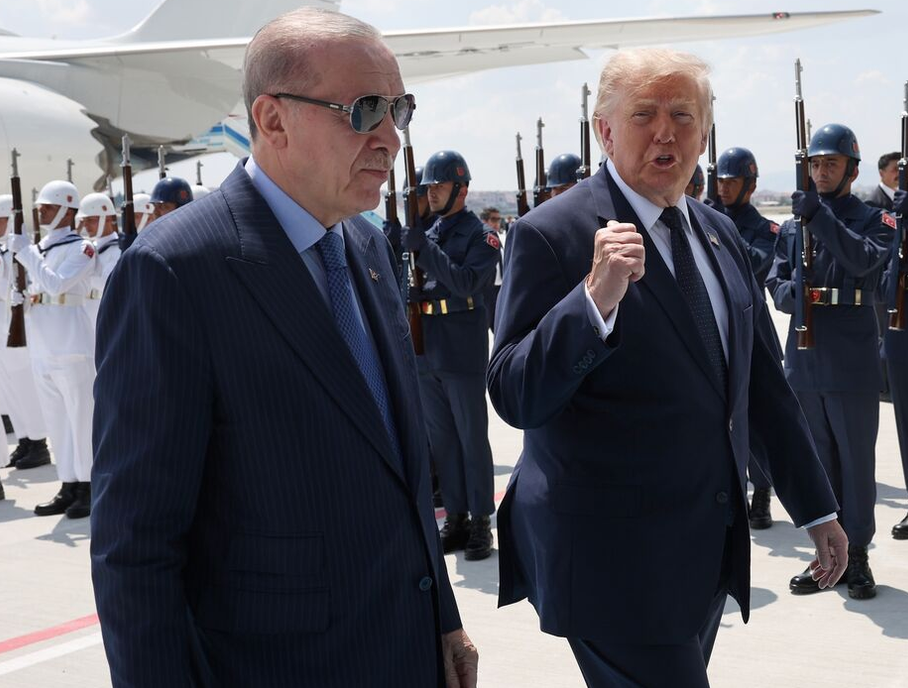
Turkey, US Resume F-16 Talks as Trump–Erdogan Meeting Looms
Turkey and the United States have resumed talks over F-16 fighter jets, a person familiar with the discussions told Al-Monitor, ahead of an expected meeting between Turkish President Recep Tayyip Erdogan and U.S. President Donald Trump on the sidelines of the UN General Assembly in New York this week.
The file is returning to the bilateral agenda just as Ankara races to modernize its air force, with fifth-generation fleets expanding across the region. No meeting between the two leaders has been officially confirmed, but officials from both sides are expected to meet in some capacity.
Speaking to reporters last week, U.S. Ambassador to Turkey Tom Barrack, who also serves as Washington's special envoy for Syria, signaled that Erdogan and Trump could sit down on the sidelines of the assembly.
Erdogan arrived in New York early Monday and is set to address the General Assembly on Tuesday. He is also expected to hold meetings on the sidelines with several heads of state and government, including Kuwaiti Crown Prince Sabah Khaled Al-Hamad Al-Sabah and Libyan Presidential Council Chairman Mohamed al-Menfi.
He is accompanied by a large delegation, according to the Turkish presidency: Foreign Minister Hakan Fidan, Energy Minister Alparslan Bayraktar and intelligence chief Ibrahim Kalin, a lineup that spans diplomacy, energy and intelligence, the three files where Turkish-American interests most often collide and converge.
The $23 billion package, two years on
The F-16 question has been formally settled on paper since January 2024, when the State Department approved a package worth roughly $23 billion: 40 new-build F-16 Block 70 Vipers, modernization kits for 79 of Turkey's existing jets, and a large tranche of AMRAAM air-to-air missiles. The notification went to Congress only days after Turkey's parliament ratified Sweden's NATO accession, ending a 19-month standoff that had kept the sale hostage in Washington.
What remains contested is execution. Turkey operates one of the largest F-16 fleets in NATO, more than 200 aircraft, but much of it dates to the 1980s and 1990s, and delivery timelines for the new Vipers have not been publicly detailed. The talks Al-Monitor's source describes are understood to be about closing that gap, not opening a new file.
The urgency has a specific origin: in 2019, the United States expelled Turkey from the F-35 program in response to Ankara's purchase of Russian S-400 air defense systems, stranding an investment Turkish officials have put at some $1.4 billion and some dozen paid-for jets that never arrived. The S-400 batteries remain in Turkey, and the CAATSA sanctions imposed in December 2020 remain on the books, the unspoken obstacle to any F-35 revival.
The regional picture has only sharpened the stakes. Israel has flown F-35s operationally since 2018; Greece, Turkey's Aegean rival, is acquiring F-35s while flying F-16s upgraded to the same Viper standard Ankara is buying; and Washington's reported openness to F-35 sales to Saudi Arabia would deepen the disparity further.
Turkey's answer has been twofold: accelerate its own fifth-generation program, the TAI KAAN, which made its maiden flight in February 2024 but remains years from squadron service and shop elsewhere, including negotiations for Eurofighter Typhoons from a European consortium that required Germany to drop years of objections. Until either arrives, the F-16 is the bridge, which is why the file keeps returning, and why this week's meetings matter.