
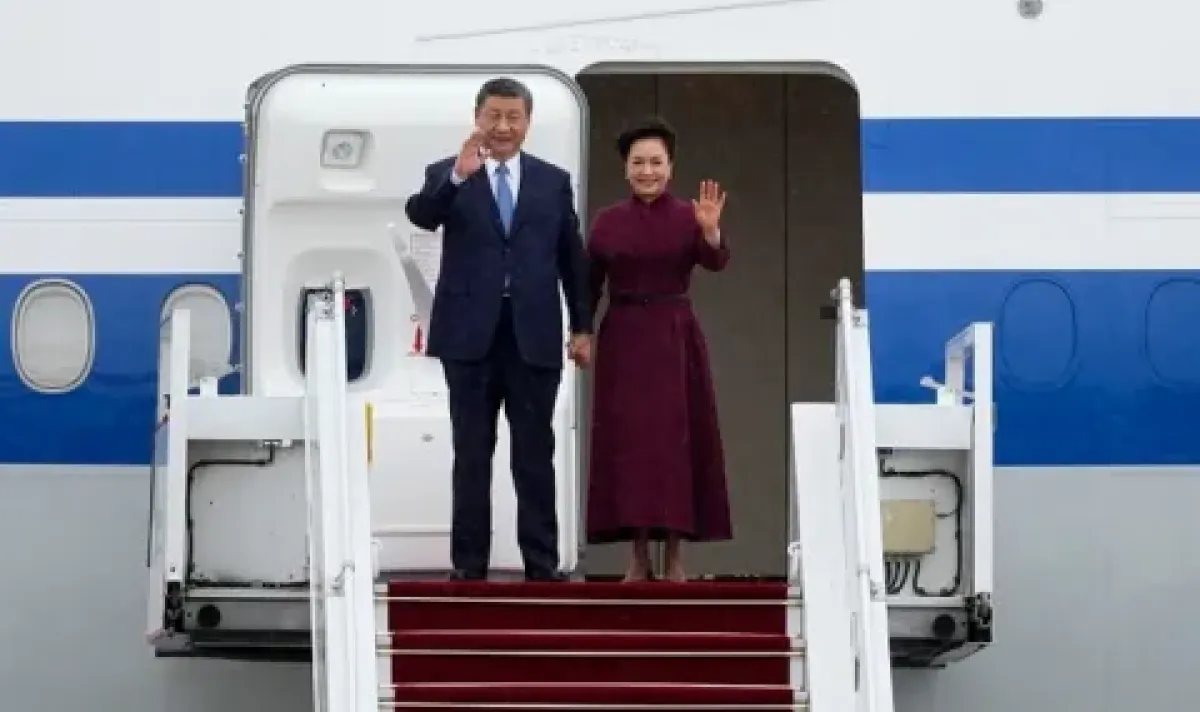
Chinese President Xi Jinping Arrives in Washington
Chinese President Xi Jinping has arrived in Washington, where he was greeted personally by his U.S. counterpart Donald Trump on the runway of Andrews Air Force Base near the American capital.
Trump's decision to meet Xi at Andrews Air Force Base rather than the White House underscores the particular attention the U.S. president intends to accord his Chinese counterpart, who is making his first visit to the United States in more than a decade. This signify his first time setting foot in the U.S. in a decade, for a formal state visit, which involves specific diplomatic protocols like a White House welcoming ceremony, a 21-gun salute, and a state dinner.
The White House has not released further details on today's meeting, but Trump is expected to take part in a welcoming ceremony for Xi and his wife, Peng Liyuan. The ceremony will kick off a three-day visit that is expected to be extraordinarily lavish and solemn, even by White House standards.
The visit, which will include a formal dinner at the White House tomorrow, serves as a reciprocal gesture to the grand reception Trump received during his trip to China in May of this year. At the same time, it is a carefully orchestrated display of diplomacy at a moment when tensions between the two geopolitical rivals remain high on several fronts — trade, artificial intelligence, the war in Iran, and China's ambitions regarding Taiwan.
The official dinner on Thursday will also be attended by prominent leaders from the technology sector, including Jensen Huang of Nvidia and Elon Musk, highlighting the growing intersection of technology and diplomacy in the U.S.–China relationship.
The two leaders are expected to discuss key topics in bilateral relations behind closed doors, though expectations for a significant breakthrough remain modest.
On Friday, Xi Jinping and his wife will tour the U.S. National Archives, where they will view historical documents highlighting the long and complex history of Sino-U.S. relations.
In addition to using the visit to maintain "strategic stability" between the two countries, Trump appears to be making every diplomatic effort to showcase his rapport with Xi. He showered the Chinese president with praise, calling him a "great leader" and emphasizing the warm personal relationship the two share. All of this, however, is unfolding as the administration continues to sidestep a number of contentious issues related to China and Xi Jinping's government.
Not everyone in Washington shares the president's enthusiasm for the visit. Senator Roger Wicker, a Republican from Mississippi and chairman of the Senate Armed Services Committee, criticized the pompous welcome accorded to the Chinese president and stated that Trump should not have invited Xi "given all the concerns we have with him and with the Chinese Communist Party." The senator also outlined a number of topics he believes Trump should address with Xi, including "the goals of China's large-scale military buildup" and "China's clear support for Iran."
The summit comes at a critical juncture in global affairs, with observers around the world watching closely for any signals that the two leaders can ease escalating tensions — or whether the elaborate pageantry will ultimately amount to little more than diplomatic theater.