
Besent Proposes New Mechanism for Artificial Intelligence Between the US and China
The business delegation - an analogue of the group of U.S. executives Trump took to Beijing in May - was announced at a time when Trump expressed readiness to allow the construction of Chinese automakers' plants in the United States
U.S. Treasury Secretary Scott Bessent and Chinese Deputy Prime Minister He Liefon concluded their talks in New York on Sunday. The US side has proposed a new notification mechanism on the safety of artificial intelligence (AI), which U.S. and Chinese Presidents Donald Trump and Xi Jinping to consider at their summit this week.
Bessent told reporters that the two sides had discussed the creation of a new dialogue between the United States and China on AI, with a particular focus on national security concerns and a system of notification of common goals and threats covering AI-related incidents reaching a level of threat to national security.
"We believe that, as with any cross-border activity, the shift from opacity to greater transparency between the two leading AI forces in the AI field is of great importance," Bessent said after the talks.
Trump and Xi first discussed possible consultations on AI development in May in Beijing, but this format was never officially approved.
China's reaction to the U.S. proposal has remained unclear. Deputy Prime Minister He and China's chief trade negotiator Li Chenghan left talks held at JPMorgan Chase's headquarters in New York without talking to the media.
U.S. Trade Representative Jamieson Greer said U.S. export control of high-tech chips for AI and semiconductor manufacturing equipment was not part of the negotiating agenda for the AI mechanism.
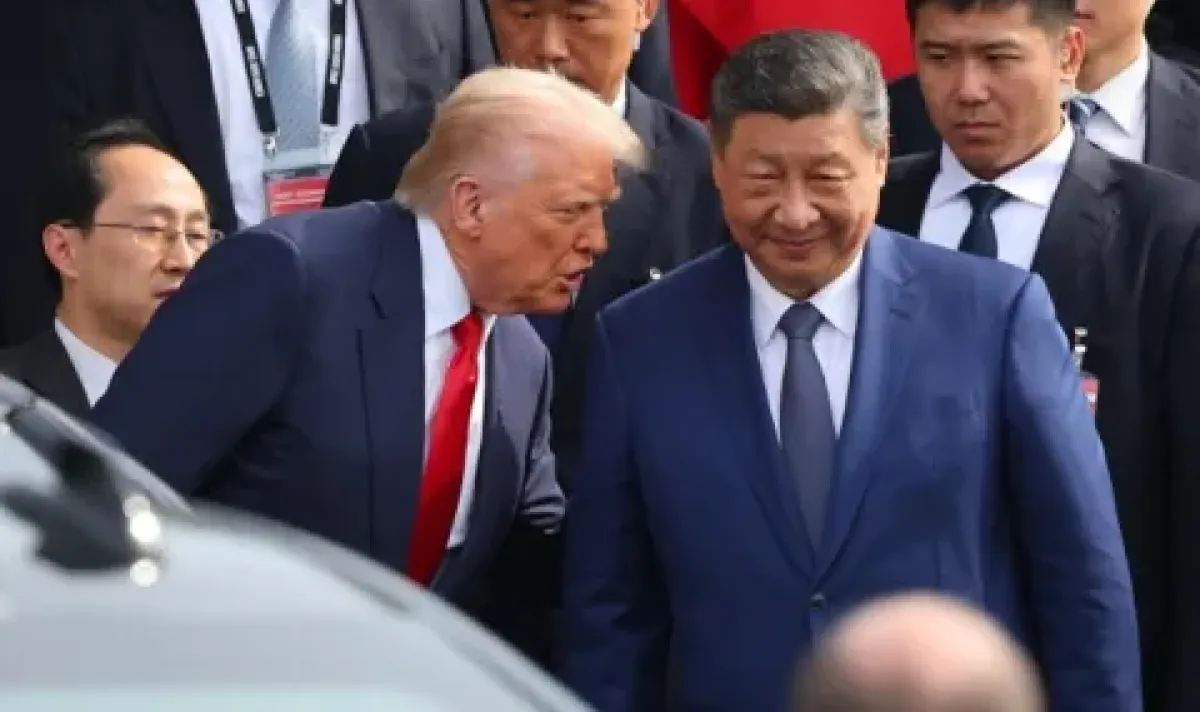
Greer added that discussions on Sunday would lay the groundwork for a "successful summit" between Trump and Xi, which will take place next Thursday and Friday in Washington.
"These are the two most powerful countries in the world, whether it's trade or AI, and it's crucial that they can cooperate. This does not mean that there are no challenges in their relationship. Many of them are obvious," Greer said.
The meeting also touched on other key topics, including "putting into action" plans on a process agreed in May, in which each of the parties to identify potential reductions in tariffs on non-strategic goods - an initiative called the "Board of Trade".
Greer did not name a specific list of products for which such reductions could be applied, but again expressed his desire for "a relatively small group of American and Chinese goods that are not of a sensitive nature and that can be traded in a balanced way."
These goods would be seen as a "separate category." Among the potential Chinese goods for export are "consumer goods and products with a low technology level," he said.
American exports, which could benefit from such an approach, include energy resources, agricultural production and medical devices, he added.
Greer and Bessent did not mention progress on facilitating the supply of critically important raw materials to U.S. companies - an issue on which U.S. officials say the quantities are insufficient, despite Beijing's previously committed commitments to ease restrictions under the U.S.-China trade truce concluded last year.
The discussions point to gradual progress in the delicate trade relations that have serious consequences for the global economy.
"I think preserving the status quo is probably the best possible scenario both sides hope for," Anna Ashton, a trade analyst with China and founder of the company Ashton Intelligence, said ahead of the meeting.
Bessent and Greer did not provide up-to-date information on other issues left unresolved after the May meeting in Beijing between Trump and Xi, including China's commitments to increase purchases of U.S. agricultural goods by $17 billion a year and purchase more than 200 Boeing aircraft.
Trump and Xi must reach an agreement that covers the safety of artificial intelligence (AI), U.S. Congressman Ro Cana, the Democratic's leading representative to the U.S. House of Representatives Special Committee on Strategic Competition between the United States and the Communist Party of China, said.
"The first request to Trump and Xi Jinping is to draft an international agreement, with two of the basic principles to be: first - a ban on any kind of cultivator AI, and secondly - the introduction of defense mechanisms to prevent the misuse of AI by people to create biological or nuclear weapons," Cana said Sunday on the show "Face the Nation" on CBS television.
China's commerce ministry said on Saturday that He would also head a delegation of Chinese companies that would visit the United States to attend economic and trade consultations ahead of the summit.
The business delegation - an analogue of the group of U.S. executives Trump took to Beijing in May - was announced at a time when Trump expressed willingness to allow the construction of Chinese automakers' plants in the United States.
On Friday, industry organizations from the U.S. auto industry called on Trump to maintain an effective ban on the sale of Chinese vehicles in the United States, citing national security considerations.